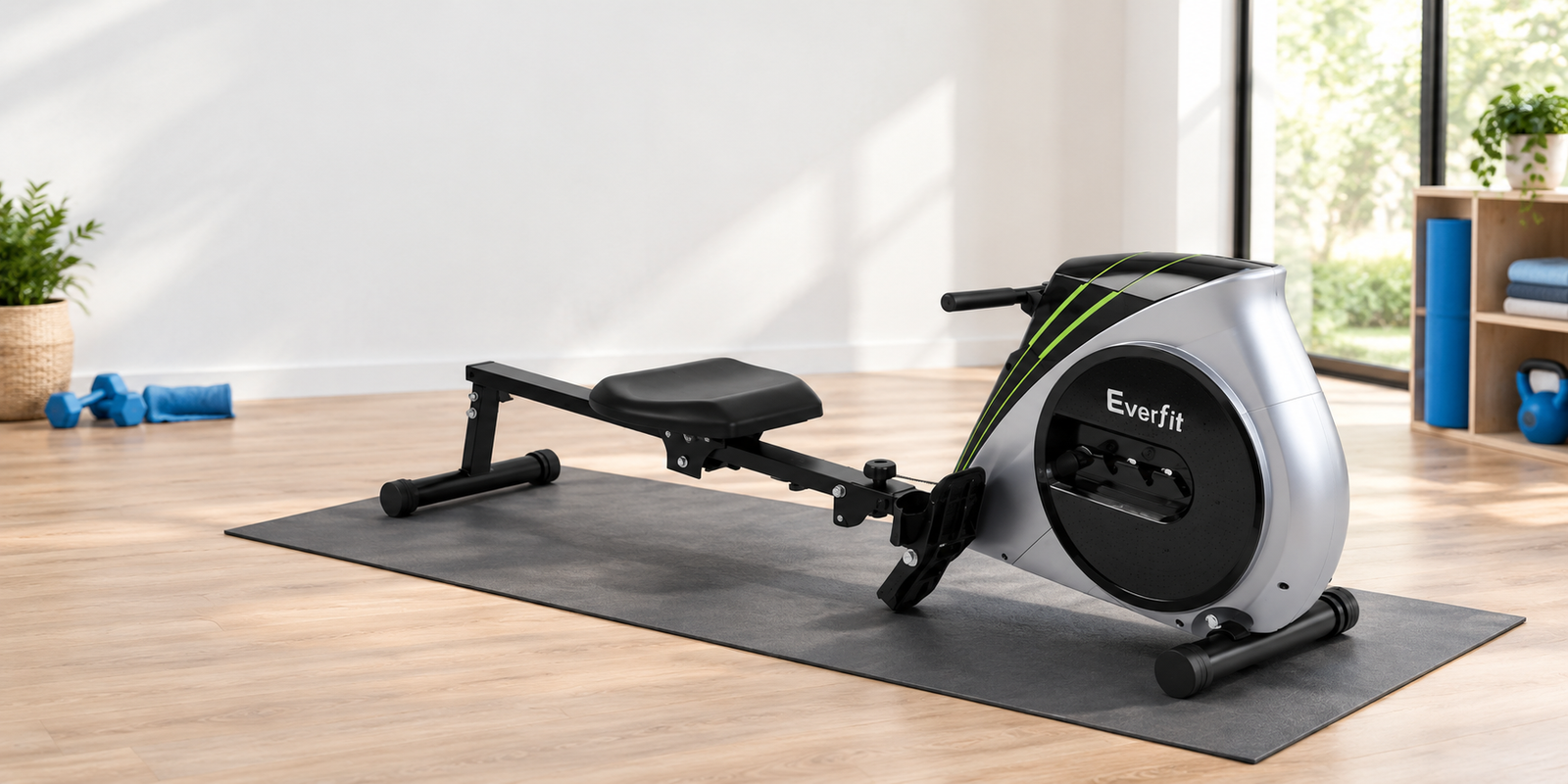

A rowing machine can deliver a demanding full-body workout, but the movement needs a little practice. The handle may look like the main focus, yet your legs actually start each stroke. Your posture, timing and recovery matter just as much.
For a beginner, learning the movement slowly is far more useful than immediately chasing speed or resistance. Once the technique feels familiar, longer and harder sessions become much easier to manage.
Lets take a closer look and learn how to use a rowing machine safely.
Set Up Your Rowing Machine Properly
Before you start rowing, spend a few minutes getting the machine ready. A comfortable setup gives you better control and reduces the temptation to compensate with awkward movements. If you’re browsing a rowing machine for sale, look at adjustability as well as the machine’s headline specifications.
Your pre-workout setup
- Footrests: Position your feet securely and fasten the straps without making them uncomfortably tight.
- Seat: Check that it travels smoothly along the rail.
- Handle: Keep a firm but relaxed grip.
- Space: Leave enough room around the machine for the complete rowing movement.
- Display: Familiarise yourself with the basic workout information before beginning.
Start with a manageable resistance setting. There is plenty of time to increase the challenge later.
Learn the Four Parts of a Rowing Stroke
The rowing stroke has four basic stages: catch, drive, finish and recovery. They aren’t separate exercises. Each flows directly into the next, so smooth timing is more important than trying to make every part forceful.
| Stage | Movement | Main point |
| Catch | Knees bent, arms extended, torso slightly forward | Keep your back comfortably neutral |
| Drive | Push through the feet and extend the legs | Let the legs initiate the stroke |
| Finish | Bring the handle towards the lower ribs | Keep your shoulders relaxed |
| Recovery | Return to the starting position | Move back under control |
The catch
At the front of the stroke, your knees are bent and your arms are extended. Lean forward slightly from the hips rather than rounding your entire back.
The drive
Push against the footrests and straighten your legs. As the legs extend, your torso opens slightly, followed by the arms pulling the handle towards your body. The arms finish the movement; they shouldn’t be responsible for starting it.
The recovery
After reaching the finish, straighten your arms, bring the torso forward and then allow the knees to bend as the seat moves towards the front. That sequence gives you time to prepare for the next stroke without rushing.
Common Rowing Machine Mistakes to Avoid
Beginners often try to make rowing harder before making it smoother. A few small technique errors can then become habits, particularly when fatigue sets in.
Pulling mostly with your arms
The handle is easy to focus on, but rowing isn’t an upper-body-only exercise. Your legs provide the initial drive. Slow the stroke down and practise pushing through your feet before bringing the arms into play.
Rounding your back
The catch requires you to lean forward, not collapse over your knees. Keep your spine in a comfortable neutral position and hinge from the hips.
Chasing a fast stroke rate
A faster pace isn’t automatically a better workout. If speed causes your posture or sequencing to fall apart, back off.
Bending the knees too early
During recovery, the handle and torso need to clear the knees first. Think arms, torso, then knees as you return to the catch.
How Hard Should a Beginner Row?
Your first sessions are mainly about becoming comfortable with the movement. A moderate effort leaves enough energy to notice your posture and correct mistakes instead of allowing fatigue to dictate your technique.
Once the stroke feels natural, training can progress gradually.
- Early sessions: Focus on short, controlled workouts.
- Building consistency: Add a little more time as the movement becomes easier.
- Increasing intensity: Introduce changes in pace or resistance.
- Structured workouts: Try intervals once you can maintain your technique reliably.
A heavy resistance setting isn’t a shortcut to better training. If it makes the stroke jerky or uncomfortable, reduce it.
Warm Up Before You Increase the Pace
A short warm-up gives you time to ease into rowing and notice anything that feels uncomfortable before the workout becomes demanding.
Start with a few minutes of light movement, then spend the opening part of your rowing session at an easy pace.
A simple start
- Move lightly for a few minutes before getting on the machine.
- Begin rowing at a comfortable pace.
- Check your feet and posture once you’re moving.
- Gradually increase the effort.
- Leave harder intervals until later in the session.
Use Resistance Without Sacrificing Technique
Resistance should make the workout more challenging without forcing you to change how you row. Different machines also use different resistance systems, so a setting on one model shouldn’t automatically be compared with the same number on another.
If you’re comparing rowers and other cardio trainers, look at the resistance system alongside the machine’s construction, adjustability and intended use.
For a beginner, controlled strokes at a manageable level are usually a more useful starting point than maximum resistance.
Rowing Machine Safety Checks
A quick inspection before each session takes very little time. It can also catch simple problems before they interfere with your workout.
Check the following
- The machine is stable on the floor.
- The seat moves freely.
- The foot straps are secure.
- The handle and cable appear to be in good condition.
- The area around the rower is clear.
- Your footwear provides a secure grip.
- The equipment is being used according to the manufacturer’s instructions.
Normal exercise discomfort is different from sharp or unusual pain. If something feels wrong, stop and assess it rather than forcing yourself to finish the session.
Choosing the Best Rowing Machine for Home
The best rowing machine for home use depends on the people using it, the available space and the type of workouts planned. A compact setup for occasional exercise has different requirements from equipment used frequently by several people.
| Feature | Why it matters |
| Dimensions | Determines whether the machine fits your available space |
| Storage | Useful when the rower needs to be moved after use |
| Weight capacity | Helps establish whether it suits the intended users |
| Footrest adjustment | Makes positioning easier for different users |
| Seat and rail | Influences the feel of each stroke |
| Resistance system | Affects workout intensity and rowing feel |
| Monitor | Provides workout information, depending on the model |
A long list of features isn’t necessarily a sign of a better home rower. Fit, usability and construction deserve just as much attention.
If you’re building a complete home setup, you can also explore exercise equipment to see what other equipment could work alongside a rower.
Buying Fitness Equipment in Melbourne
For anyone shopping for fitness equipment in Melbourne, the room where the machine will be used should influence the purchase from the beginning. Rowers are relatively long pieces of equipment, so measuring the available floor area is particularly important.
Also look beyond the workout space. Doorways, stairs, lifts and storage areas can affect how easily larger equipment gets into and around your home.
If the rower needs to be moved after every workout, make sure that process is realistic. Equipment that is awkward to access can quickly become something you stop using.
See also: The Power of Professional Website Design: Transforming Your Business Online
Build Technique Before Building Intensity
A rowing machine rewards patience at the beginning. Learn the sequence, keep the movement controlled and give yourself time to develop a comfortable rhythm.
Once that foundation is in place, you can gradually increase workout duration, pace or resistance. The aim isn’t to make every session exhausting. It’s to develop a technique you can repeat comfortably and consistently.
When choosing a machine, the same principle applies. Pick equipment that fits your space, suits its users and makes sense for the workouts you actually plan to do.